Frequently asked questions
How does vascular biometrics support border control?
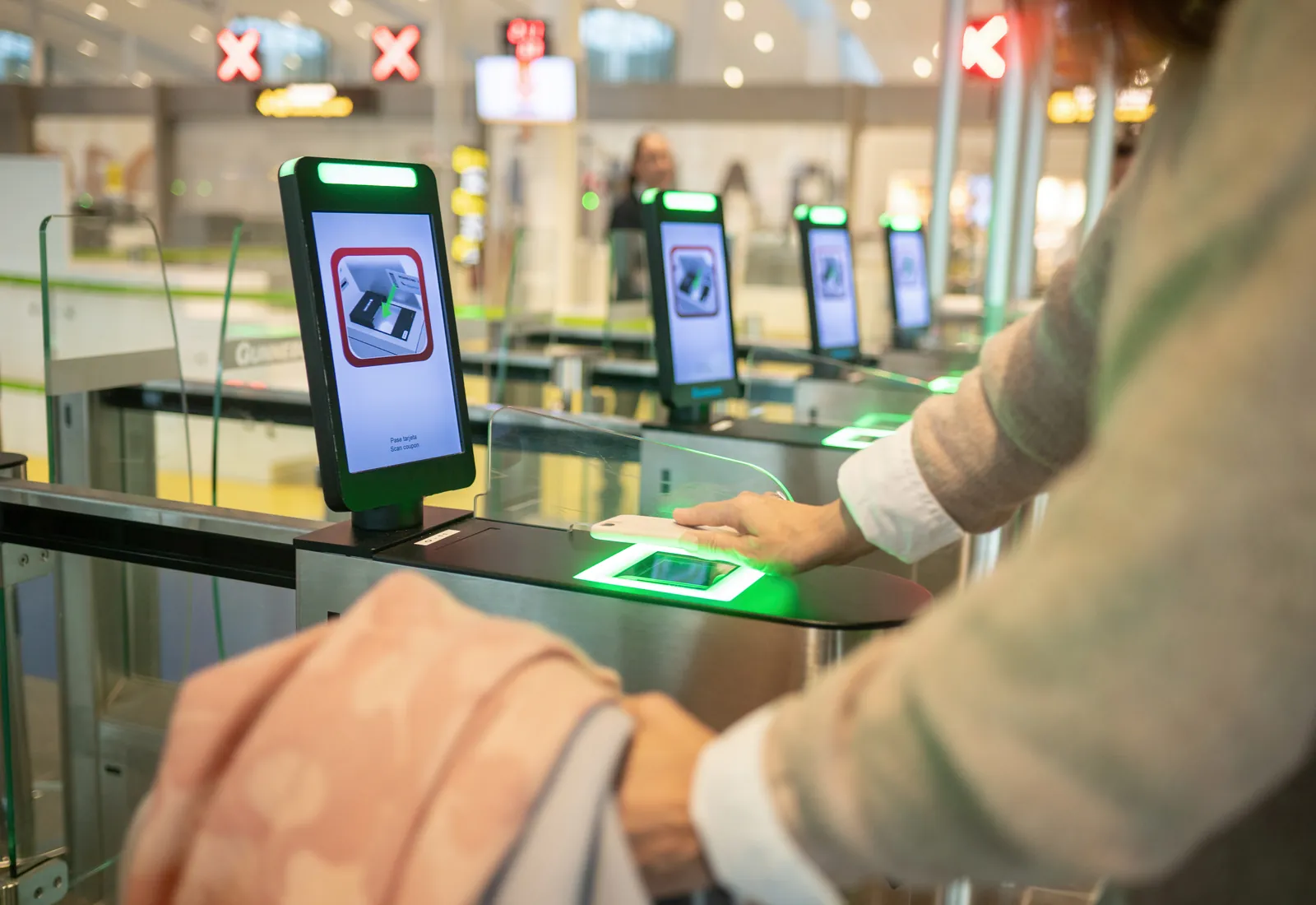
At an e-gate or automated border control (ABC) lane, a palm scan confirms that the traveller is the person who enrolled. Universal ID™ is designed to clear routine crossings and flag the cases that need an immigration officer. It can support air, land and sea checkpoints.
How does Universal ID™ stop presentation attacks at a checkpoint?
A presentation attack uses a fake trait, such as a printed face or a silicone fingerprint, to fool a sensor. Universal ID™ reads veins and bone inside the hand and checks for blood flow and pulse. A mask, photo or copied fingerprint has none of these.
Does biometric data leave the device?
No. The Gen-2 SDK does 1:1 verification on the device. No biometric data leaves it, which supports privacy-preserving identity programmes. It can also bind a traveller to the chip in an NFC passport.
Does Global e·dentity™ work with DHS and TSA?
Global e·dentity™ holds a Cooperative Research and Development Agreement (CRADA) with the Department of Homeland Security and the Transportation Security Administration, expanded in 2026. A CRADA is a joint research agreement. It is not a contract award or an endorsement by either agency.
How can a government agency evaluate Universal ID™?
Qualified agencies can request the
Gen-2 evaluation SDK and test it directly. Systems integrators can read the
deployment briefing, which covers the patents, the CRADA and the integration path.