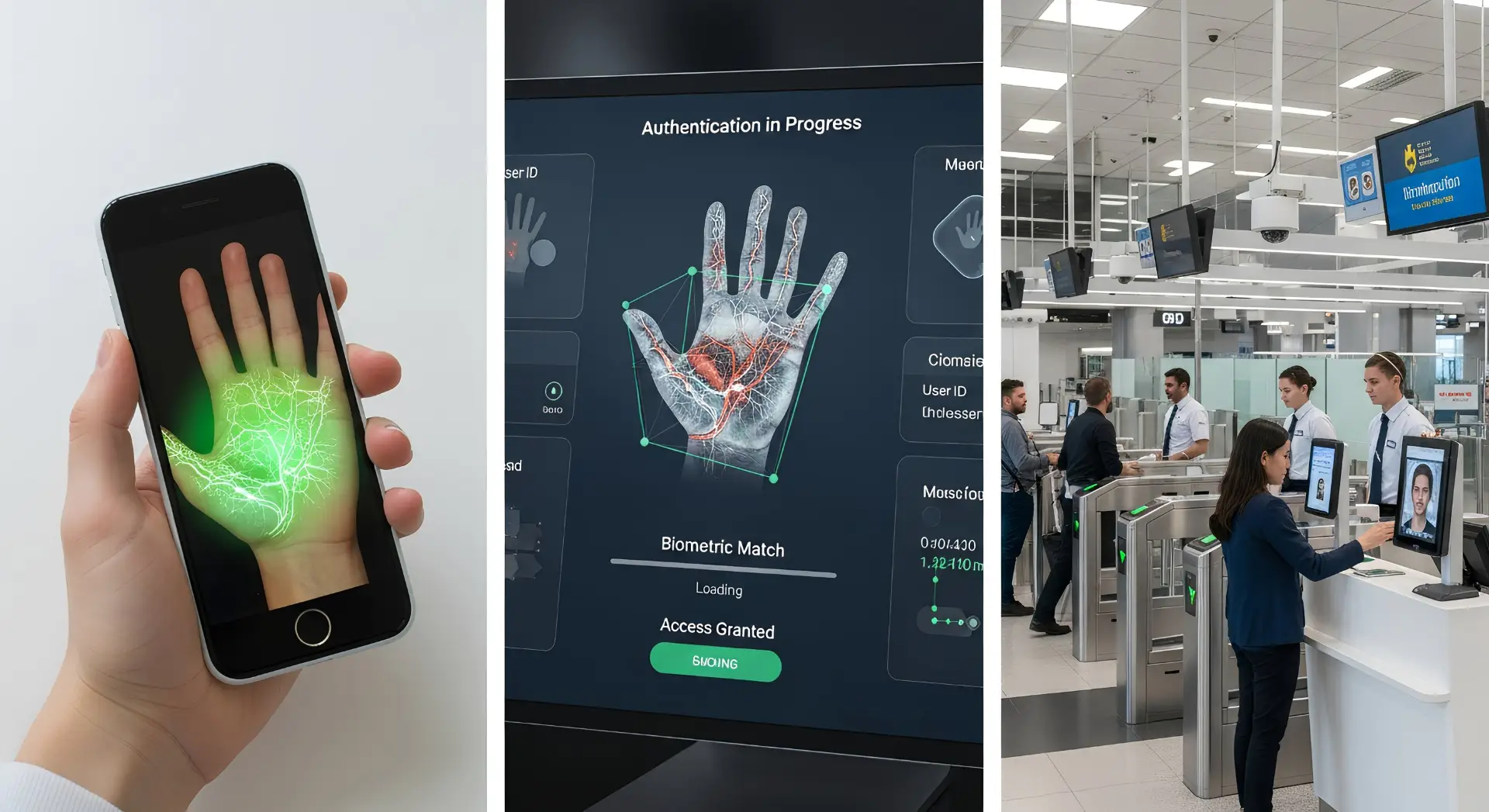
Vascular biometrics identifies a person by the pattern of blood vessels beneath the skin. Universal ID™ maps veins with infrared light and adds the bone structure around them. Each person's pattern is unique, and it does not change as the skin ages or wears.
A multimodal biometric system checks more than one trait and fuses the results into one identity decision. Universal ID™ combines vein pattern, bone structure and pulse. A match needs all of them, so one weak or copied trait cannot pass alone.
Fingerprints are left on every surface you touch, and faces are in every photograph. Veins sit inside the body, so there is nothing to lift or copy. Blood flow and heartbeat also prove that the hand is alive, which is the job of liveness detection and presentation attack detection (PAD).
Universal ID™ is licensed as a multimodal biometric SDK. Partners build it into their own hardware and applications. Qualified government agencies, health systems and enterprises can request the
Gen-2 evaluation SDK and test it under their own conditions.
Yes. Universal ID™ is protected by seven issued U.S. patents granted between 2018 and 2022. The
Intellectual Property page lists each patent number, title and grant date.